

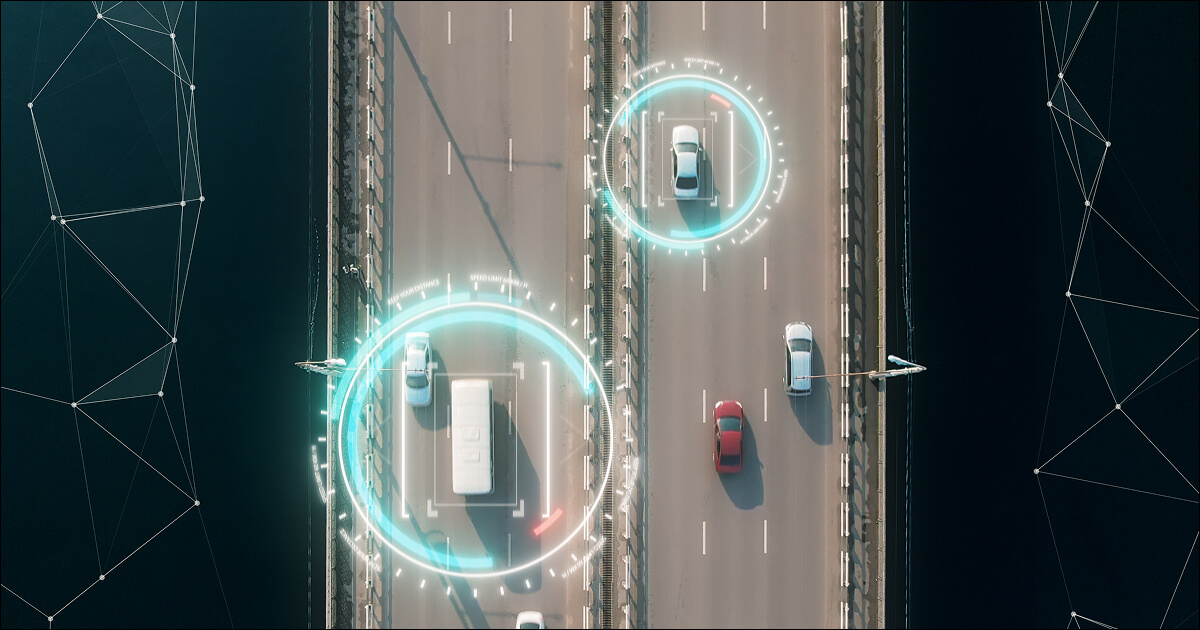
The idea of a tractor-trailer with nobody behind the wheel has, for years, sounded like a futuristic impossibility. Until now.
Driverless trucks are no longer just a concept. They’re a reality on highways, city streets, and interstates across the U.S. And, as they become increasingly common on our shared roadways, so, too, do the questions about driverless technology safety.
Federal Rules Are Still in Flux
On October 7, 2026, the Federal Motor Carrier Safety Administration (FMCSA) began letting qualifying driverless trucks swap the reflective warning triangles that human drivers set out along the roadside for flashing amber beacons mounted on the cab. The reasoning is simple enough: there’s no one on board to walk back and place the triangles. But even as laws like these, which are ostensibly designed to promote driverless vehicle safety, go into effect, others continue to push back. One Pennsylvania lawmaker, for instance, has been circulating a plan that would put a licensed driver back in the cab of heavy vehicles that use automated driving systems.
Nationwide, and in Pennsylvania, the stage has been set for driverless tech. The question isn’t whether driverless trucks will be on the road. It’s not even whether these driverless vehicles will become involved in accidents. The harder question is what happens after a crash.
Federal laws governing safety are taking shape, and the state has set up rules for certifying and insuring these vehicles. But, after an accident, fault still gets sorted out under familiar negligence and product liability principles, just with an unfamiliar cast of defendants.
How Driverless Trucks Made It Onto Pennsylvania Roads
Until recently, Pennsylvania law required a licensed driver in the driver’s seat of any vehicle on the road. That changed with Act 130, signed in November 2022 and in effect since July 2023. The law makes PennDOT the main regulator of what it calls “highly automated vehicles” and sets up a self-certification system: a company that wants to run these vehicles files paperwork, including insurance and safety information, and receives a certificate of compliance.
PennDOT then spelled out the details. In late 2024, the department adopted guidelines that allow certified operators to run vehicles without a safety driver in the seat, or to supervise them from a remote location. Among the companies certified under that framework were Aurora, Motional, Perrone Robotics and Mapless AI.
Under this law, operators must also notify a municipality at least 10 days before they begin running in it. The law even makes room for platooning, where a human-driven lead truck is followed by a second truck operating on automation.
Regulatory Gaps Remain
Federal trucking rules were written on the assumption that a human being is sitting in the driver’s seat, and these rules begin to break down when that key element is stripped away. Take the federal requirement that a truck stopped on a highway must put out reflective warning triangles. Someone has to climb down from the cab and place those triangles on the road. But without an actual person in the vehicle, there’s no one to do it.
That’s the gap the FMCSA’s October 7 exemption was meant to close, by allowing qualifying driverless trucks to use cab-mounted beacons instead. The agency had actually turned down a similar request in 2024, calling it too vague. After a series of short-term waivers, it settled on a five-year exemption that names the equipment and the vehicles involved and runs through October 2031. Operators have to report crashes that happen while the beacons are in use within five days.
Some supporters of driverless technology point to a positive track record with these beacons, but it’s a short one. Aurora told regulators that 34 of its trucks covered more than 500,000 miles under an earlier waiver, with the beacons lit for just under 10 hours total. The Owner-Operator Independent Drivers Association, which represents small-business truckers, opposed the exemption, arguing that beacons may be hard to see from some angles and that autonomous systems don’t always perform the way they’re designed to.
The scale matters too. Aurora has said it runs 109 heavy trucks and expects to pass 200 by the end of 2026, with thousands possible within five years. Meanwhile, a comprehensive federal framework for automated vehicles, the SELF DRIVE Act among them, has been proposed repeatedly. PennDOT’s own guide for municipalities noted the bill had yet to come up for a vote. In the meantime, states and individual agencies are filling in the gaps one decision at a time.
Should a Human Be in the Cab? The Debate Continues
Against this regulatory backdrop, State Rep. Ben Waxman circulated a memo this summer announcing a bill that would require a licensed driver inside any vehicle over 10,000 pounds that uses an automated driving system. His stated concern is safety, including the potential for a “catastrophic” mishap involving a fully automated vehicle in a crowded city. Coverage so far has focused on buses, though some trucks could be included under the suggested weight threshold. As of now, it’s a proposal, not a law, and whether freight trucks end up covered will depend on the bill’s final language and whether it passes.
Concerns about driverless technology are not new. Neither is the pushback. When Act 130 was moving through the legislature, the Pennsylvania Conference of Teamsters advocated for a human safety operator and cited a poll showing 84 percent of surveyed voters saw autonomous vehicles as a threat to public safety.
Meanwhile, the other side argued that Pennsylvania, the birthplace of much of this technology, risked losing jobs and investment to states with less-strict rules. Whichever way the debate lands, the reality for now is that driverless trucks are legal here, and crashes involving them can absolutely happen.
Without a Driver, Who Answers for a Truck Crash?
When a conventional semi-truck or 18-wheeler causes a crash, the investigation usually starts with the driver and works outward to the trucking company. With a driverless truck, the starting point shifts. Pennsylvania requires the certificate holder, the company authorized to run the vehicle, to carry at least $1,000,000 per accident to cover death, bodily injury and property damage to third parties. Traffic violations, even when no crash occurs, are directed to that same entity, rather than to a human who isn’t there. A serious truck accident can generate damages well beyond that figure, however, and the certificate holder may not be the only party responsible.
Depending on what went wrong, the list of possible defendants can stretch past the operator to the carrier hauling the freight, the company that developed the driving software, the truck’s manufacturer, the shop that maintained its sensors and brakes, or a remote operator who was supposed to be monitoring. While Pennsylvania makes it easier than you might expect to identify the certificate holder—PennDOT is required to publish a list of certificate holders, along with contact information for accident claims and a registered agent for service of process—this could merely be a starting point.
Multiple defendants bring a wrinkle of their own. Under Pennsylvania’s Fair Share Act, a defendant found less than 60 percent at fault is generally responsible only for its own share of the damages. In a driverless truck case, that gives the operator, the software developer and the manufacturer every reason to point at one another, and sorting out who did what becomes the heart of the case.
The Proof Lives in the Truck’s Data
In a crash involving a human driver, the key evidence is often testimony: what the driver saw, how fast they were going, whether they were paying attention. With an automated truck, the equivalent evidence is usually digital.
This evidence might include:
- Whether the driving system was engaged
- What its sensors detected
- How it responded
- What any remote monitor was doing at the time
Operators do have to report certain crashes quickly. State law requires certificate holders to self-report any accident involving injury, death or property damage to PennDOT within six hours. That initial report must indicate whether the automated system was engaged.
Like any electronic record, the underlying data can be overwritten or lost if no one formally asks for it to be preserved. This is one reason attorneys who handle truck accident cases often send preservation demands almost immediately, before the logs, footage and system records have a chance to disappear.
What to Do If You Are Involved in a Driverless Truck Accident
The first steps look a lot like any other collision: call 911, get medical attention even if you feel okay, and move to safety if you can. After that, a few details matter more than they would in an ordinary crash.
If possible, note whether anyone was in the cab, photograph the truck, including any company name, DOT number or identifying markings, and capture the scene, any flashing beacons, and visible damage. Act 130 directs PennDOT to set standards for an external identifier showing owner, vehicle and insurance information, so those markings may point you straight to the responsible company.
As with any motor vehicle accident, be cautious when it comes to talking to the other party’s insurance provider. An adjuster for the operating company may call within days or even hours of the crash, asking for a recorded statement. You aren’t required to give one, and it’s wise to talk with a lawyer first.
Time limits apply here, as well. In Pennsylvania, most personal injury lawsuits, including those arising from commercial vehicle accidents, must be filed within two years. The same two-year clock generally applies to a wrongful death claim after a fatal crash.
Pennsylvania also follows a modified comparative negligence rule: if a jury finds you more than 50 percent at fault, you can’t recover anything. If you’re 50 percent or less at fault, your recovery is reduced by your share. Whether you were in a passenger vehicle, on a motorcycle, or on foot, the process of proving what happened after a car accident leans on those same rules.
Where This Leaves Pennsylvania Drivers
Whether Pennsylvania ultimately keeps its current approach to driverless commercial trucks or pulls back toward requiring a human on board, the questions that matter after a crash won’t change much. Someone is responsible; the work lies in figuring out who that party is and, most importantly, proving it.
If you or someone you love was hurt in a collision involving an autonomous or driverless truck, Handler, Henning & Rosenberg can help you understand where you stand and what comes next.